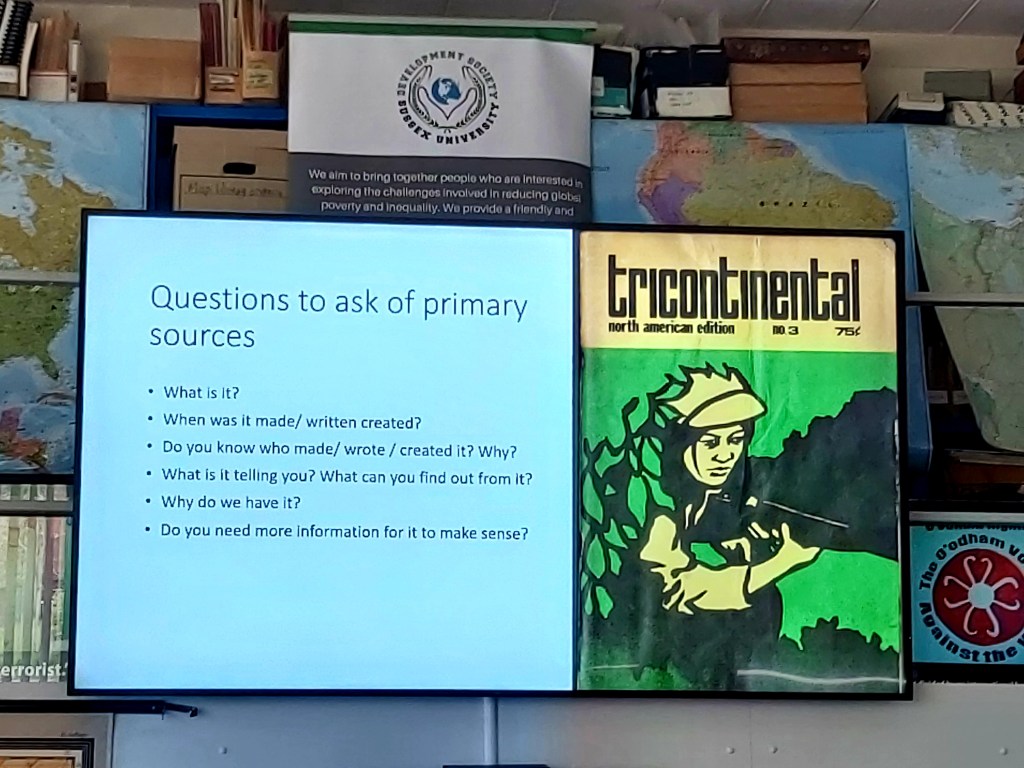
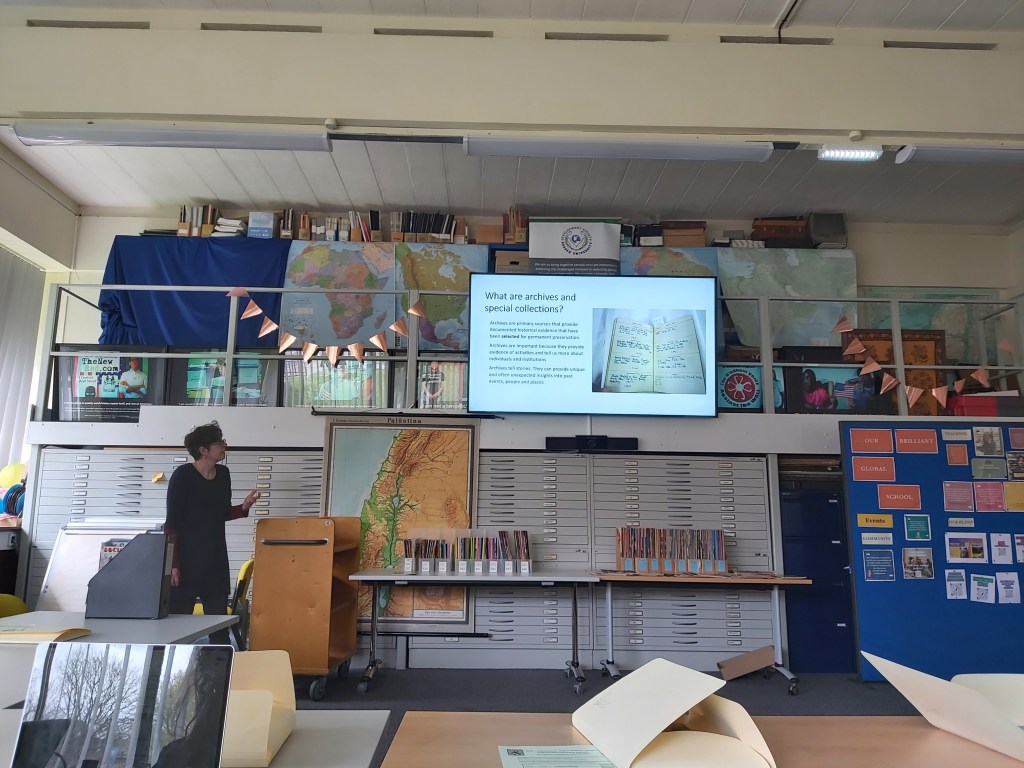
A little belatedly we wanted to write up the details of the ‘Exploring different approaches to using Tricontinental and Mujeres in your research from a library perspective’ workshop, which took place on Monday 22 April in the Global Studies Resource Centre.
It was organised as part of the ongoing EIF (Education and Innovation Fund) sponsored ‘Student Researchers in the BLDS Legacy Collection‘ project and involved undergraduate and postgraduate students from across a variety of different University of Sussex departments, including Anthropology, Art History, History and International Relations.
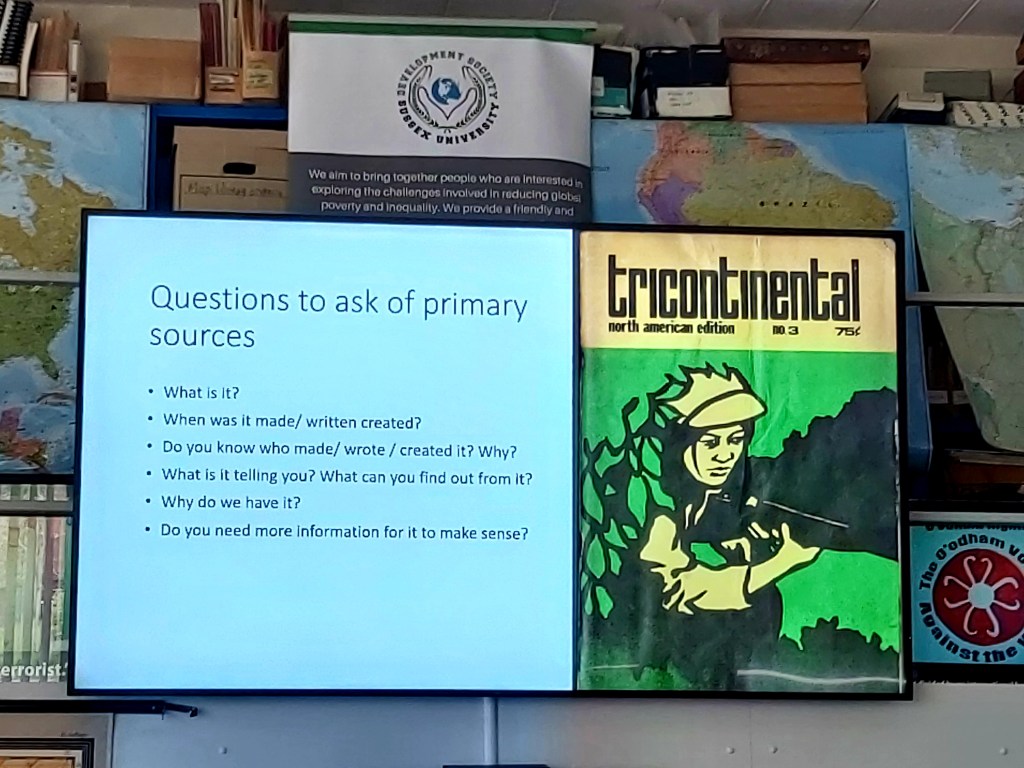
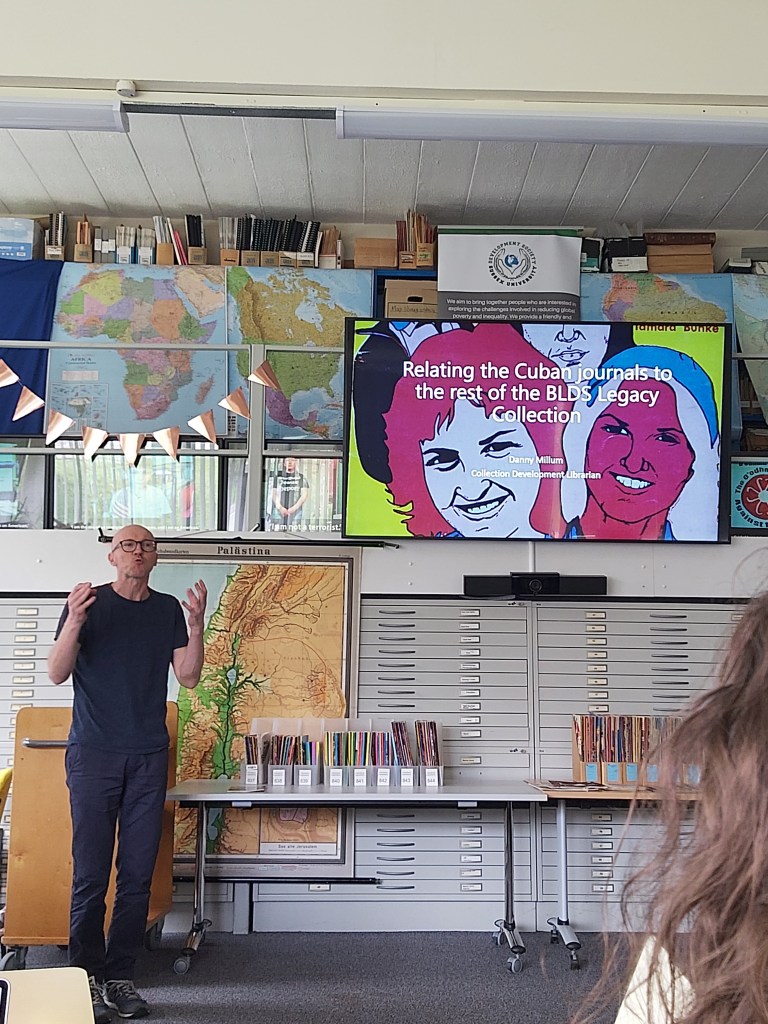
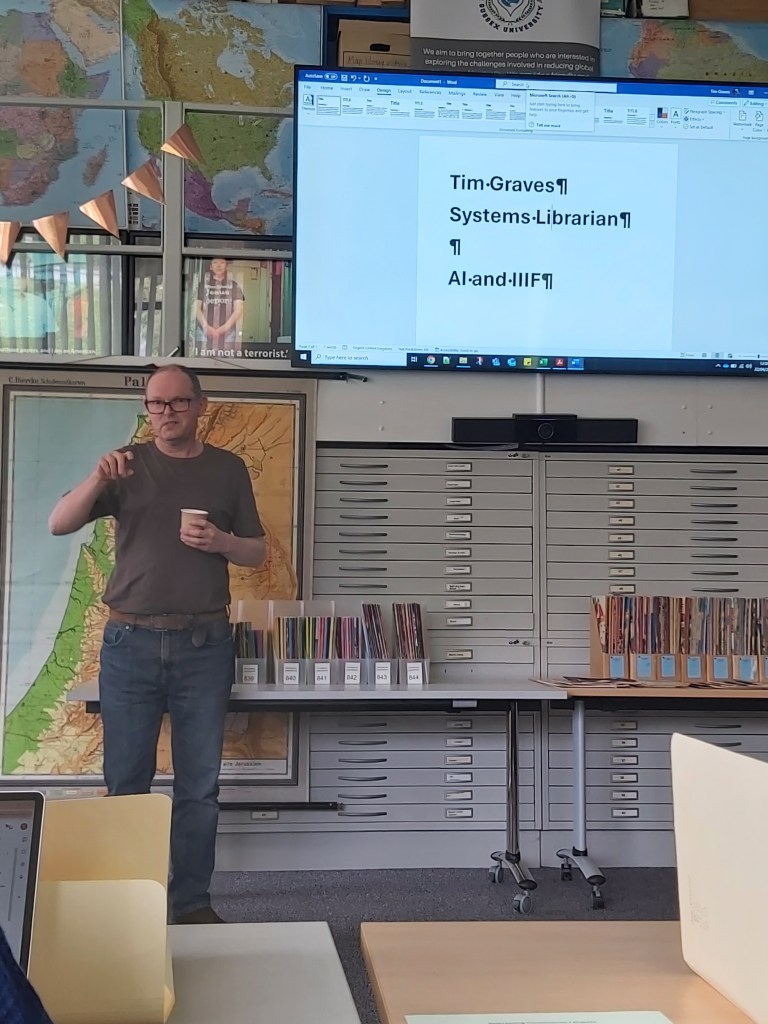
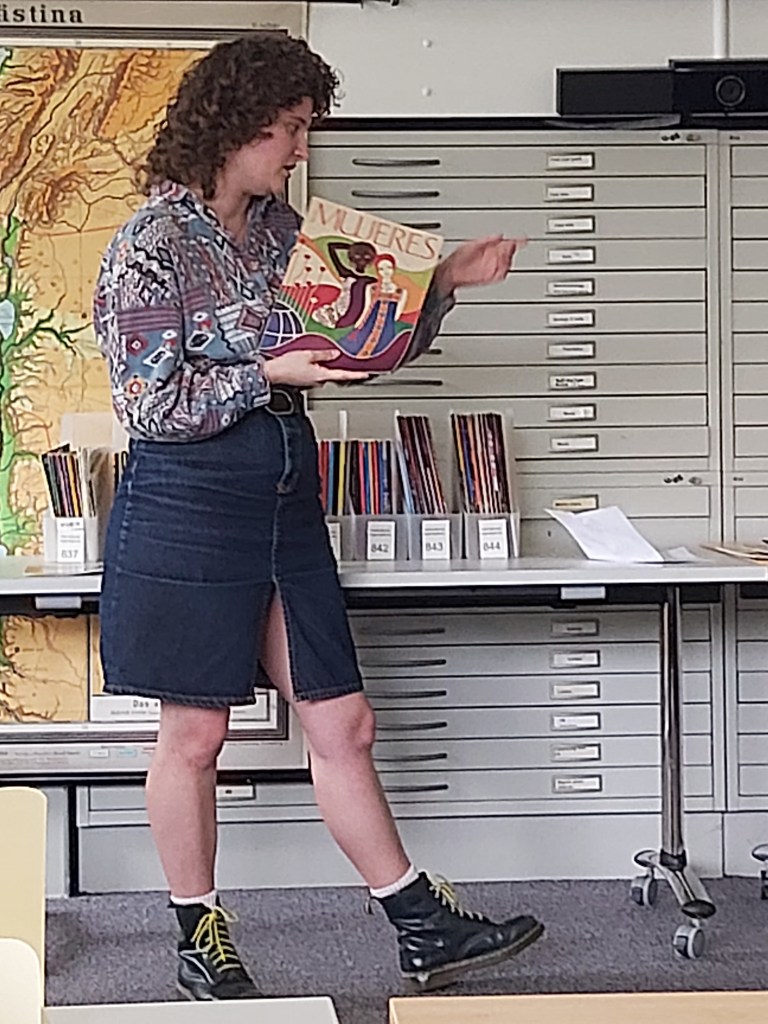
In the first part of the session Sussex librarians, archivists and academics gave a series of lightning talks on different approaches to the journals, from reflections from an art history perspective on the aesthetics of Cuban magazines to an exploratory analysis of how AI digital humanities techniques could be applied to Tricontinental. We’ve embedded all the presentations and talks below.

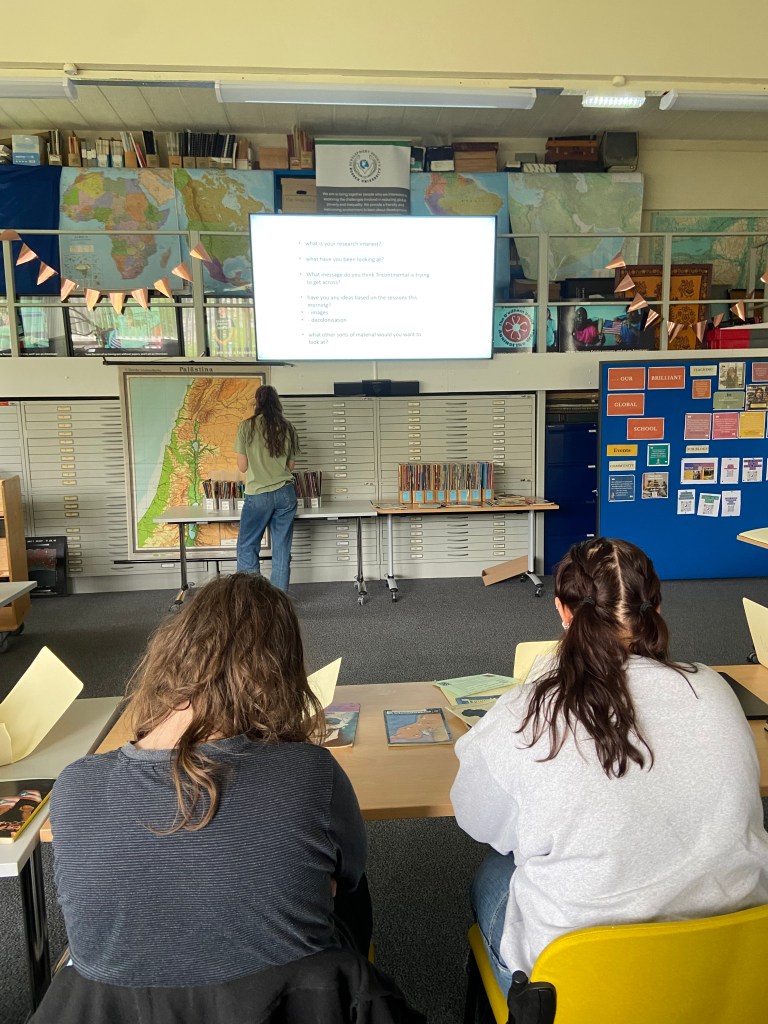
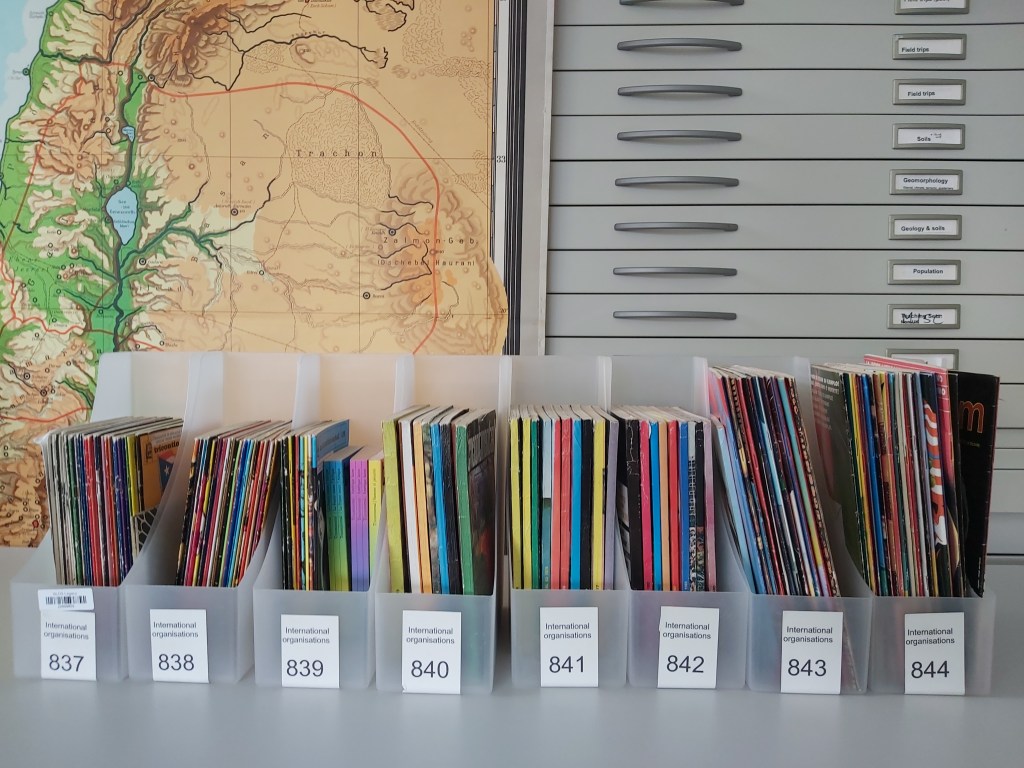

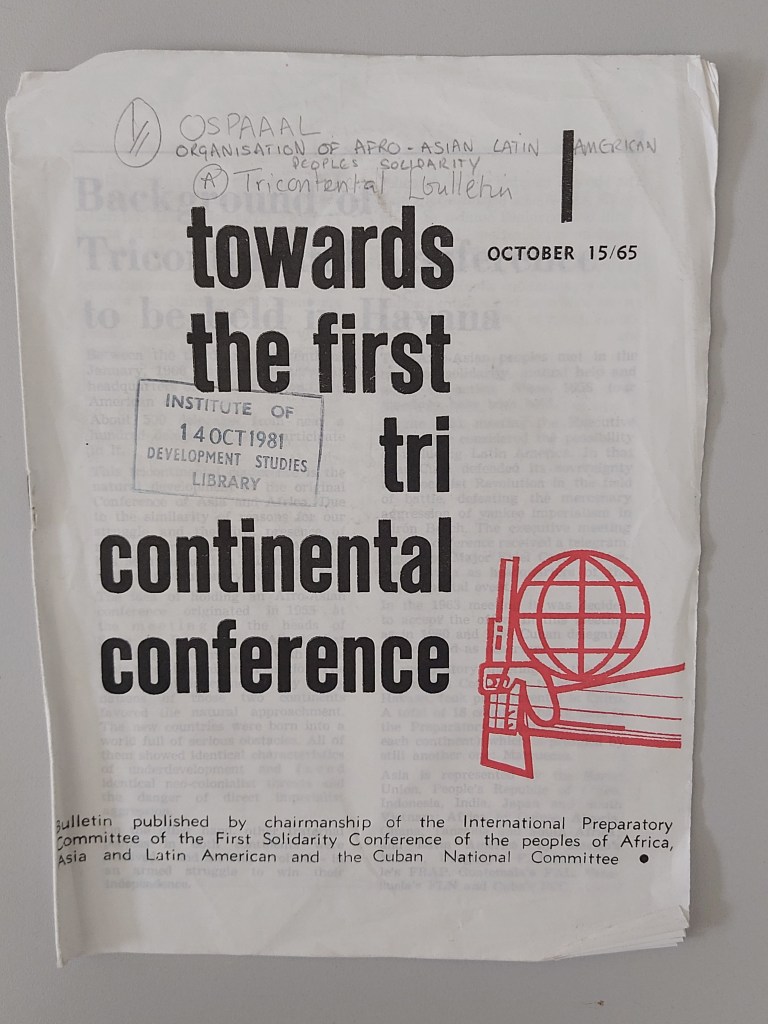
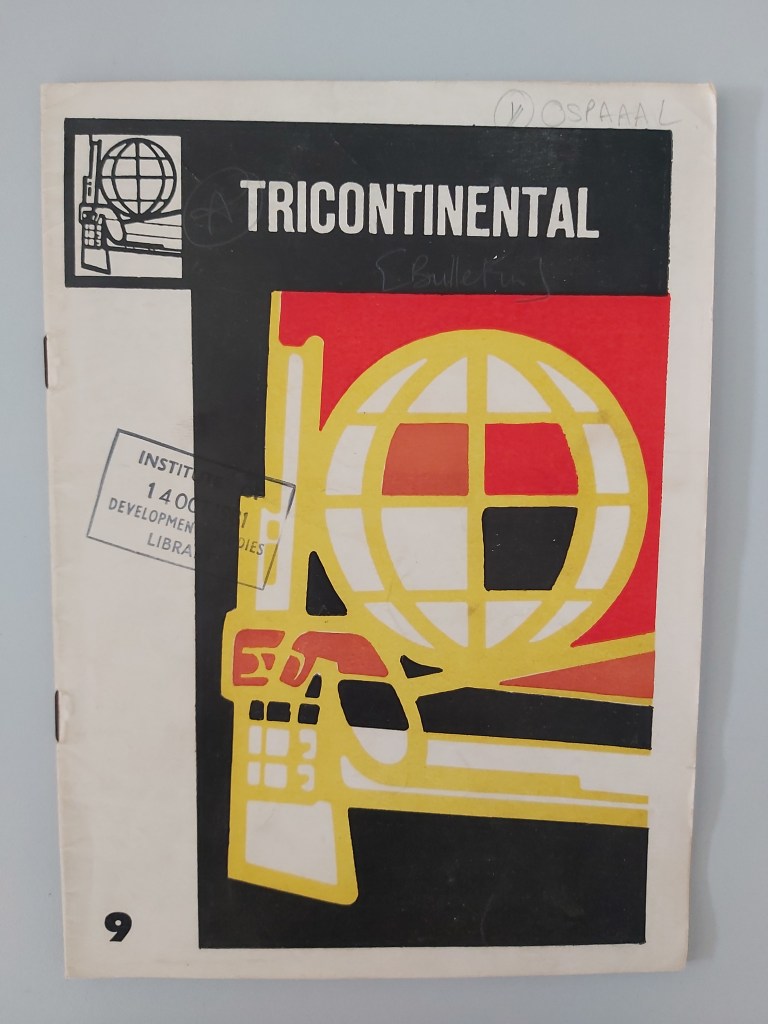
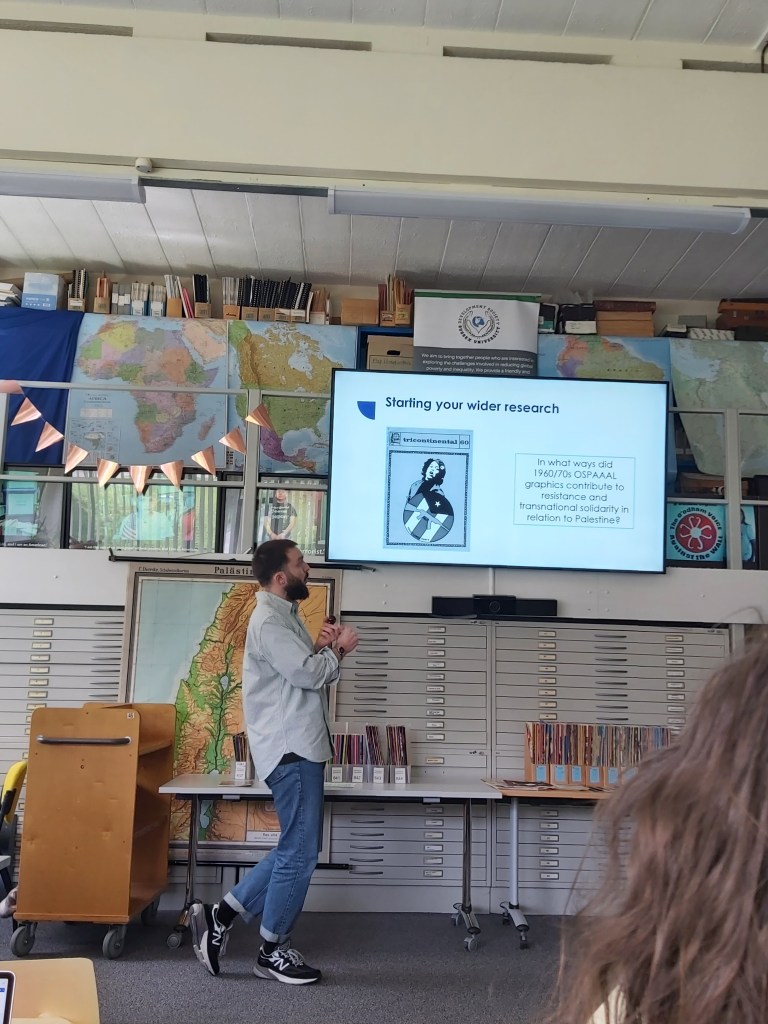
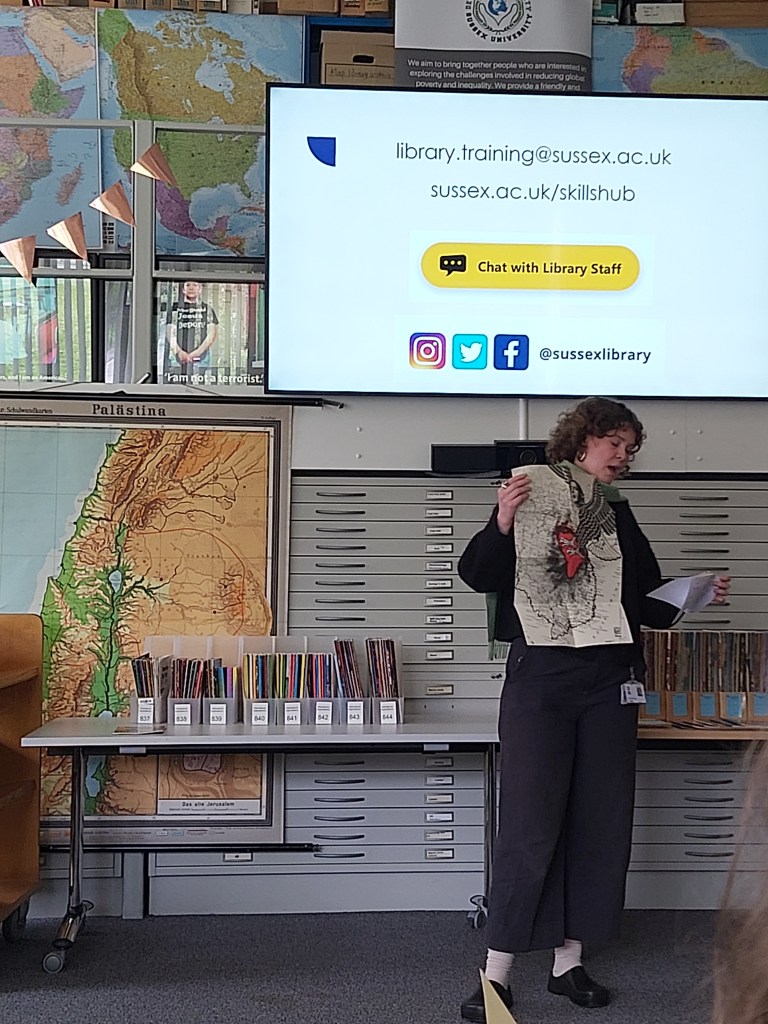
In the second part, we applied these approaches to specific examples from the collections. The library team found print/online articles, images and cartoons relevant to each attendee’s research topic, which included Palestine and post-colonial French Africa, Angola, African internationalism, Angolan labourers, MPLA and PCP, the Carnation Revolution in Portugal, Third Worldist solidarities and global history, the link between the US civil rights movement and the Tricontinental movement, climate/environment change, and migration specially in Latin America, the independence struggle in the DRC (Democratic Republic of Congo), energy generation and vaccine production across Africa, gender-based violence experiences of women with disabilities in Nigeria, female empowerment and UBI in India and many more.
Amazingly for almost all of these topics there was some form of coverage in Tricontinental and/or Mujeres, and so attendees were able to spend some time looking through the materials and thinking about them in terms of the morning presentations. The session ended with a freeform discussion of everyone’s different research topics and the ideas for further work that had been generated, and perhaps the best indication of the success of the event was the feedback that said (after 5 hours) that we needed more time!
The project will be continuing over the summer, with the next steps being to co-produce with these students a reusable and extensible ‘toolkit’ of pedagogical approaches, teaching ideas and discussion points based on Tricontinental and Mujeres. If you are interested at all in being involved just email Danny at dgm24@sussex.ac.uk.
Primary sources – challenges, benefits and pitfalls (Karen Watson, Special Collections Archivist, The Keep)
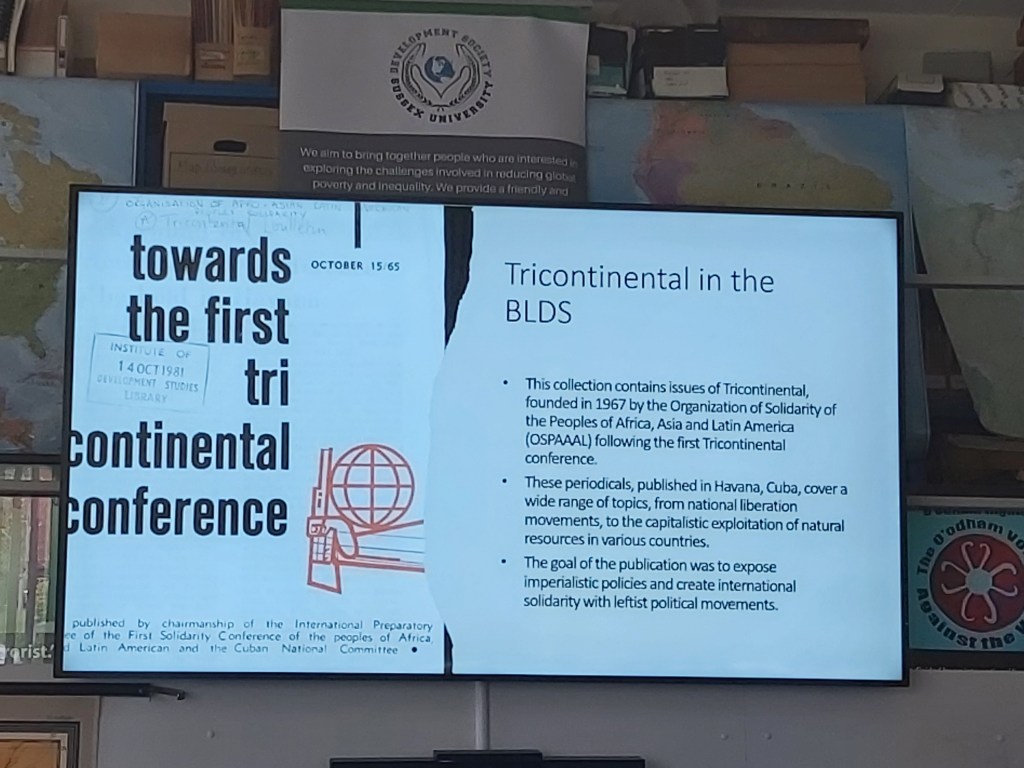
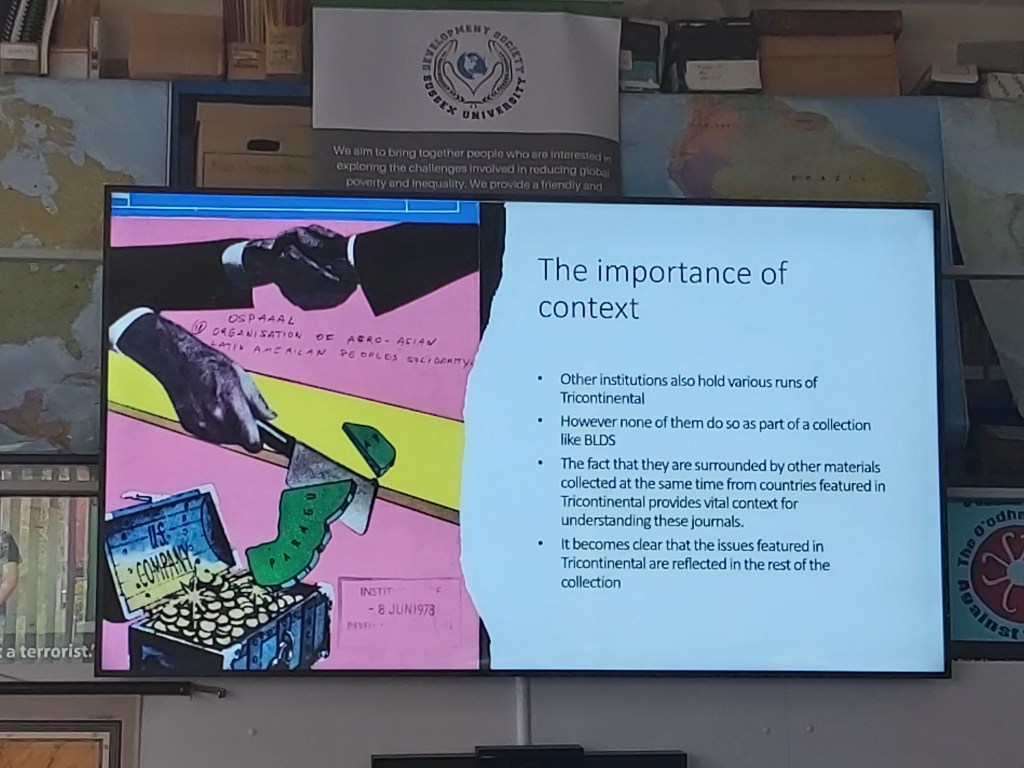
How books talk to each other – the importance of the relation between the Cuban journals and the BLDS Legacy Collection (Danny Millum, Collection Development Librarian, UoS Library)
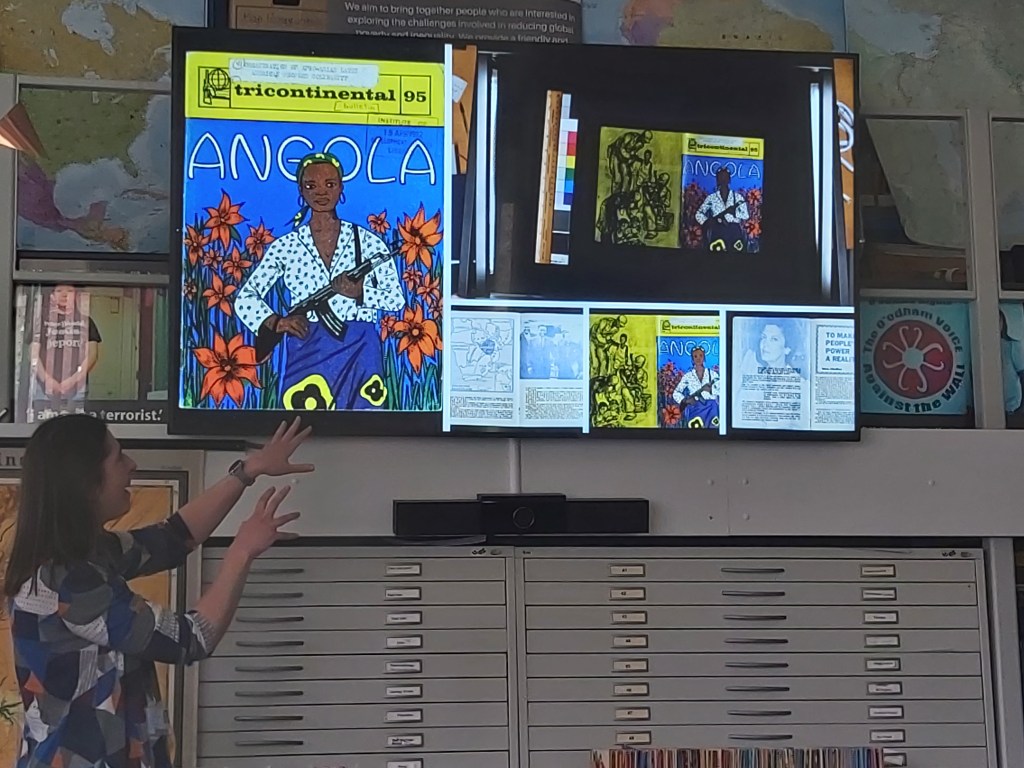
Digitising Tricontinental – progress so far and plans for the future (and the benefits/limits to this) (Karen Smith, Assistant Digitisation Officer, UoS Library)
Exploring other rare Global South journal holdings at Sussex (Beth Collard, Assistant Library Officer, UoS Library)
Decolonisation and the Tricontinental (Alice Corble, Leverhulme Fellow, School of Global Studies)
Referencing and building a search strategy for related secondary sources (Daniel Flowerday, Teaching and Learning Supervisor, UoS Library)
Digital humanities approaches to Tricontinental – using AI and IIIF as research tools (Tim Graves, Systems Librarian, UoS Library)
Aesthetics of the BLDS Collection: Cuban Graphic Design (Elsa van Helfteren, Assistant Library Officer, UoS Library)
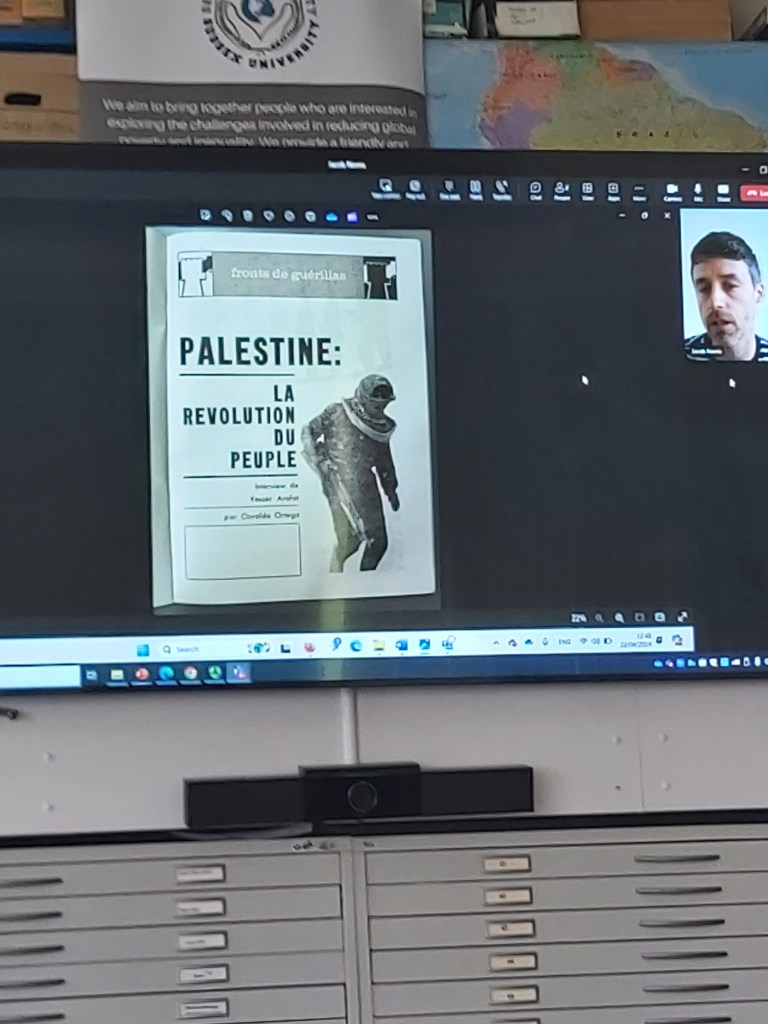
Using Tricontinental in research (Jacob Norris, Senior Lecturer in Middle East History)
 The British Library for Development Studies Legacy Collection